Before fish farming
When subsistence fishing was the predominant activity, the catch fed the fisherman 's family, unless he was in the service of a prominent figure. Then, around the 10th century , artisanal fishing began, in which fish were sold to local consumers . Later, local fish markets would become an integral part of what historians call the " Commercial Revolution of the Middle Ages ."

The great land clearings
In the 10th century, during the "Medieval Warm Period," the population increased significantly. To feed themselves, farmers improved their equipment and cereal cultivation methods, not without environmental impact. Fields replaced forests, grain mills proliferated along rivers, and the growth of towns contributed to the impacts on waterways. Large-scale deforestation led to increased runoff. Floods made fish reproduction less efficient and resulted in higher mortality rates when small streams dried up in the summer.
The rise of Christianity
On the one hand, watermills flourished, and with them the need to create millraces and supply canals, storage reservoirs, and weirs to block the migration of anadromous fish to their spawning grounds. On the other hand, there was also the rise of Christianity and its rules prohibiting the consumption of land-based animal flesh for roughly a third of the year (130 days). Christians substituted fish for meat. Consequently, with a growing population, the demand for fish skyrocketed, while freshwater environments and fisheries were severely strained.
13th century, privatization of fishing rights
Before 1200, records and archaeological evidence show a predominant consumption of anadromous species (salmon, sturgeon, trout, eels, lampreys) as well as pike. The most sophisticated societies (princes, clergy) lived near rivers or lakes large enough to support year-round fishing. With continued predation by an increasing number of humans, 13th-century legislators were compelled to take measures to prevent overfishing, hence, for example, the royal fishing ordinance issued by Philip IV in 1289.
Trade development
Medieval legal historians indicate that the privatization of fishing rights, formerly held in common or public hands, became a general trend, accompanied by the significant development of usufruct rights and trade. Former servants of lords became full-time fishermen and paid annual fees. Prices rose, even though public authorities undertook to regulate fisheries for reasons of consumption and conservation. Laws established minimum size limits, prohibited fishing during spawning season, and banned methods deemed too aggressive towards juvenile fish.
Decline of certain species...
Between the 8th and 13th centuries, sturgeon consumption fell from 70% to 10% in 17 sites in the southern Baltic (Benecke 1986). In the 13th century, in France and England, sturgeon, having become scarce, was legally reserved for the king (Fleta 1955). As for salmon, catch and price records from several small coastal rivers in Lower Normandy indicate a decline in abundance between 1100 and 1300. Among wealthy Parisians and in prosperous Flemish monasteries, the consumption of once-prized sturgeon and salmon had virtually ceased by around 1500 (Desse & Desse-Berset 1992, Stemberg 1992, Ervynck & Van Neer 1992, Clason et al. 1979).

...for the benefit of others
Conversely, comparable evidence shows that other fish were gaining importance in the diet, notably eel and carp. Among the fish bones identified in deposits from the 12th to the 16th centuries at Gaiselberg Castle in Lower Austria, 60% of the remains are those of carp and date from after 1400 (Spitzenberger 1983).
At that time, the species also dominated the tables of Paris and La Charité-sur-Loire in the Nièvre region (Desse & Desse-Berset 1992, Sternberg 1992, Audoin-Rouzeau 1986). The method of cooking carp is described in the Mesnagier de Paris, compiled around 1393 (p. 188 of Jérôme Pichon's 1846 edition). The remains of eels and common carp show an increase in more lentic and tolerant fish varieties, at the expense of those requiring clean, fresh, flowing or estuarine waters, preferably with a gravel substrate (see Balon 1975, 1990). Yet it was precisely these aquatic habitats that were disrupted by medieval agricultural, urban, and industrial developments.

Medieval fish farming
Although coastal fisheries in some parts of Western Europe began to extend further offshore around 1200, the lack of refrigeration meant that transporting fresh fish was only possible within a 150-kilometer radius inland. Canneries did produce salted herring and dried cod, which they shipped to consumers further inland, but these were looked down upon by the elite. Those who could afford fresh fish did so…

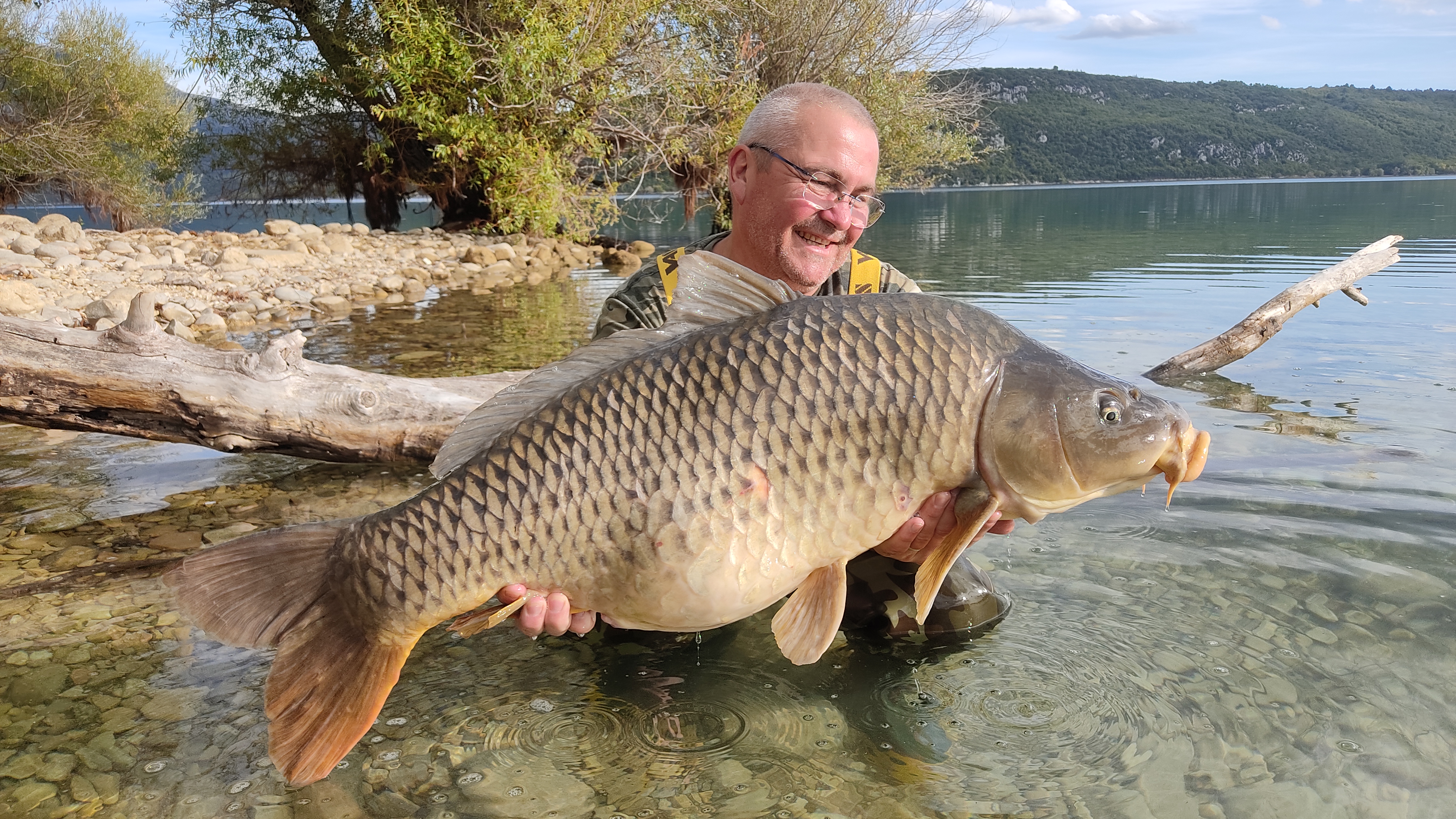
In vast areas of inland Europe, the supply of fresh marine fish being impossible, opened the way to fish farming and in particular to that of carp for their tolerance of the environment, their fecundity, their rapid growth and their large size.
To meet the demand for fresh fish, medieval Europeans established new freshwater habitats and altered the mix of fish species to create new ecosystems, both domesticated and wild. While artificial structures for the long-term retention and rearing of live fish were clearly a response to the shortage, there is no tangible evidence of fish farming on monastic estates in the early Middle Ages, where rules prohibiting the consumption of meat nevertheless meant greater fish consumption. For example, the rich archives of Cluny, from its height of wealth and prestige until the mid-12th century, refer to the capture and temporary storage of fish, but give no indication of their rearing in ponds.
The construction of ponds, 11th-13th centuries
Building a pond—and not just a fishpond—means creating a new aquatic habitat. Pond construction began in the 11th century and developed rapidly in the 12th and 13th centuries, where human populations and economies were thriving (Burgundy, Berry). Across the Channel, from Wiltshire to Yorkshire, and from the late 11th to the late 13th centuries, fishponds were created on estates belonging to bishops, large monasteries, and the English crown.
Religious or secular?
It is important to note that pond construction was not the sole domain of the clergy; lay landowners also built, owned, and operated fishponds in Western Europe during the 12th and 13th centuries. Around 1160, while the Count of Sancerre was flooding land near Bourges to create a pond, Emperor Frederick Barbarossa ordered the construction of another large pond in Kaiserslautern (southwest Germany). In 1216, Simon de Joinville, Seneschal of Champagne and Lord of the Upper Meuse region, ensured his pond was exempt from taxing when he granted the Cistercian monks of Clairvaux permission to fish in his river. This is not surprising, as religious and secular elites throughout the Middle Ages were interconnected and interdependent. Although ecclesiastical institutions kept more records, they were no more innovative than their secular neighbors (Berman 1986, Bouchard 1991, Benoit & Wabont 1991, Hoffmann 1994a).
Central Europe
The active construction of fishponds later spread to east-central Europe. The Cistercian house founded in 1133 at Waldassen in the German-Czech border region of Egerland did not build its first pond until around 1220 (Muggenthaler 1924). A few ponds are recorded in Bohemia in the 11th century, but the earliest constructions date from the mid-13th century, with a rapid increase a century later. As for pond construction in southern Poland, it lagged behind that of Bohemia by about a generation (Szczygielski 1965, 1969; Hoffmann 1989).
Carp farming
At the beginning of the 14th century, if not earlier, the best fish farmers on the continent focused on carp alongside pike. Certainly active by the beginning of the 16th century, some regions became renowned for their carp farming, from Sologne and Berry in France to Oświęcim Zator in Poland. Carp farming thus spread to many places where it was necessary (due to the absence of large, still-productive inland lake fisheries) and possible, thanks to impermeable soils and the lack of steep terrain. From these regions, various domestic strains of carp have developed.